
Car Shipping to Switzerland
2026 Guide
Car shipping to Switzerland is simple when an agent guides you through the steps, costs, and import requirements. Whether you’re moving to Switzerland, selling a vehicle overseas, or importing a classic car, an experienced international auto transport company can help you comply with Swiss regulations and protect your vehicle during the journey overseas.


Why CFR Classic?


Get an Instant Car Shipping Quote
Tell us about your vehicle and we’ll respond within 24 hours with a personalised cost breakdown.
* Please note that your information is saved on our server as you enter it.
How Our Container Loading System Protects Your Car on the Trip to Switzerland
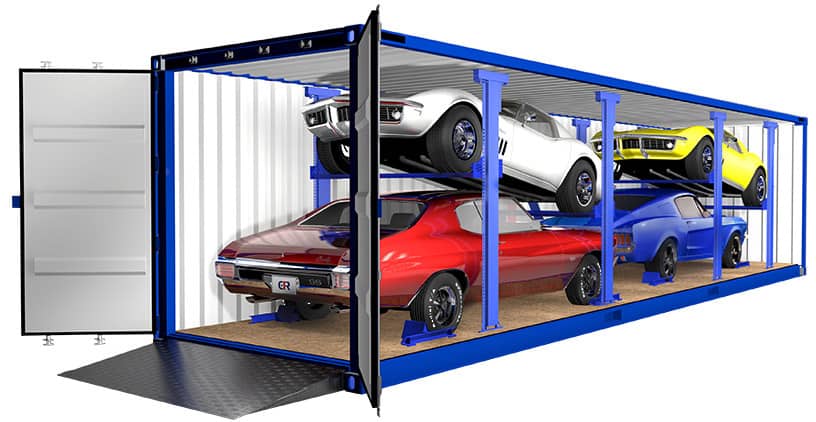
R-RakThe R-Rak system replaces traditional wooden ramps with a secure steel racking system, allowing up to five classic vehicles to be safely loaded into a single container while minimizing movement and reducing the risk of damage during transit.
Shipping a Car to Switzerland– Key Takeaways
Quick SummaryThe most important facts about shipping a car from the US to Switzerland — before you dive into the detail.
Shipping a Car to Switzerland – Key Takeaways
Transit time: 4–6 weeks (ocean), 3–10 days (air)
VAT: 7.7%
Cost: $1,550–$6,500+ (ocean), $15,000+ (air)
Main entry points: inland delivery via Northern European ports (Bremerhaven, Rotterdam) and onward to Swiss terminals such as Basel, Zurich, Geneva, Bern
Swiss customs duty: applies on import (typically calculated by vehicle weight)
Required inspection: Swiss registration inspection at the cantonal Road Traffic Office; vehicles over 10 years old require a technical test before registration
Car Shipping Process Summary
The ProcessFrom your first quote to keys in hand, here’s the full journey.
Request a Free Quote
Submit your vehicle details online. Our team responds within 24 hours with a personalized cost breakdown and recommended shipping method.
24-hour response
Prepare Your Documentation
Gather your title, bill of sale, and other required paperwork.
Schedule Pick-Up or Vehicle Drop-Off
Have your vehicle picked up from your location and trucked to the port or drop it off at the agreed upon US port terminal.
Ocean Transit to Switzerland
While your vehicle is in transit, you can track its progress through our customer portal.
Customs Clearance in Switzerland
Our local broker handles all Swiss customs paperwork, customs duty and the 7.7% VAT.
Delivered & Registered in Switzerland
Your vehicle passes the cantonal registration inspection before plating at the local Road Traffic Office and release.
Switzerland Car Shipping Costs, Major Ports & Shipping Methods
PricingShipping a car from the U.S. to Switzerland starts around USD $1,550, depending on departure port, method (container vs RoRo), vehicle size and destination. As Switzerland is landlocked, vehicles typically enter through a Northern European port and are transported inland to a Swiss terminal. The estimated transit time is 4–6 weeks, but this can vary depending on routing and method.
Route | Roll-On/Roll-Off | Shared Container Load | Full Container Load | Air Freight |
|---|---|---|---|---|
US East Coast → Basel (via Bremerhaven) | $1,550 | $2,400 | $3,500 | |
US West Coast → Basel (via Bremerhaven) | $2,000 | $3,400 | $4,800 |
Get an Instant Car Shipping Quote
Tell us about your vehicle and we’ll respond within 24 hours with a personalised cost breakdown.
* Please note that your information is saved on our server as you enter it.
US Departure Ports
LogisticsWe offer multiple departure locations for car shipping services. In addition, we can arrange for pickup from another location and have your vehicle transported to the departure port.
Ports Served in the USA
Los Angeles
New York
Houston
Miami
Savannah
Baltimore
Switzerland Destination Ports
LogisticsSwitzerland has no seaport, so vehicles are typically shipped to a nearby European entry port and then transported inland. Onward inland delivery is available to terminals across Switzerland.
Ports Served in Switzerland
Basel
Zurich
Geneva
Bern
Lausanne
Lucerne
Bremerhaven (Germany) – primary inland-routing entry port
Rotterdam (Netherlands) – alternative entry port
Duties, Taxes & Fees
Taxes & FeesIn addition to the costs associated with shipment, you’ll need to prepare for other costs, such as those levied by the Swiss government. Some of these fees could include:
Switzerland Import and Registration Fees
Swiss customs duty (typically assessed by vehicle weight)
VAT (7.7%)
Automobile tax
Annual Swiss motor vehicle tax
Swiss motorway vignette (mandatory for use on certain roads)
Optional marine insurance/shipping protection
Cantonal registration inspection fees
Vehicle modification costs (if non-conforming)
Compulsory third-party liability insurance
Cantonal registration fee, license plates and driver's license exchange costs
Your agent can help you navigate these questions. You can generally expect a 7.7% VAT along with Swiss customs duties. The customs duty rate depends on vehicle weight rather than purchase price. The Swiss motorway vignette is required if you wish to use your car on certain motorways.
Swiss Import Duty and Tax Exemptions
Duties & ExemptionsMost importers pay 7.7% VAT plus excise — but several categories are fully or partially exempt.
Exemption Type | How to Qualify & Exemption Details |
|---|---|
Transfer of Residence (Personal Effects) | US citizens who are moving to Switzerland from the USA and shipping a car when they relocate may import the vehicle as part of their personal effects, provided they have been the owner for over 6 months. If you import duty-free under these rules and then sell the vehicle within one year of moving to Switzerland, you’ll be liable to pay the duty retrospectively. |
Temporary Import (Duty-Free Customs Plates) | If you are bringing your car or motorcycle into Switzerland on a temporary basis, you can apply to the local Swiss Customs Authorities for duty-free customs plates, which allow you to import the vehicle duty-free for the permitted period. |
Classic / Vintage Vehicles | Classic vehicles may be subject to reduced duty rates or different inspection considerations. Eligibility should be confirmed with Swiss Customs (Eidgenössische Zollverwaltung) before shipping. |
Shipping Methods
Choose your shipping methodYour vehicle can be shipped via container, via air freight, or on a roll-on/roll-off ship (think of it like a parking lot on a shipping vessel).
The method you choose will impact the cost and timing of your shipment. A quick summary of the benefits of each:
- Cheapest → Ro-Ro
- Balanced → Shared Container Load
- Maximum protection → Full Container Load
- Fastest → Air Freight

Ro-Ro (Roll-On/Roll-Off) Shipping
Ro-Ro shipping is typically the most affordable option, with the additional benefit that these ships have more frequent departures, meaning your shipment will have a shorter lead time before arrival.
Ro-Ro’s main drawback is that your vehicle will be in the open on the Ro-Ro deck with hundreds of other vehicles, and you will not be able to transport personal items inside the vehicle.
Shared Container Load (SCL)
With shared container load, we’ll use our R-Rak method to safely load your vehicle into a container, along with a few other customers’ vehicles. This allows you to share the cost of a container while benefiting from added security compared to Ro-Ro shipping.
However, it’s generally more expensive than Ro-Ro and takes longer as the container won’t ship until it’s been filled.
Full Container Load (FCL)
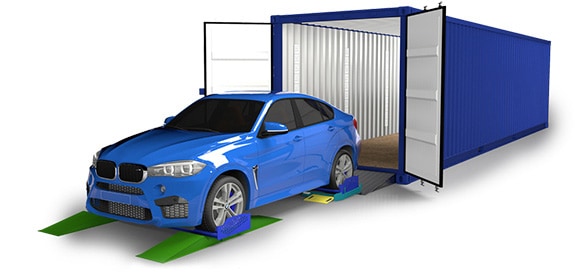
Full container load offers the benefits of shared container load shipping; however, the container is reserved exclusively for your vehicle or vehicles. This offers the highest level of protection and security, allows you to ship your vehicle with personal goods inside, and departs as soon as it can be loaded onto a vessel – no waiting to fill the container. The primary drawback is that FCL is more expensive than SCL and Ro-Ro.

Air Freight
Air freight is the fastest method. It’s exactly what it sounds like – we load your vehicle into a plane and then it is transported by air to its destination in Switzerland.
While significantly more expensive than other options, it’s ideal for time-sensitive shipments, reducing the process to days rather than weeks or months.
Import Eligibility & Documentation Required
ComplianceTo ship a car to Switzerland, you’ll need to confirm a few details. Your agent can assist you in the process of determining your vehicle’s eligibility for shipment to Switzerland.
- Your vehicle must comply with Swiss safety, emissions, and technical standards.
- You must register your car in Switzerland within one year of its import.
- Auto liability insurance is mandatory and must be in place before you can receive vehicle authorization from the cantonal Road Traffic Office.
- Vehicles over 10 years old must undergo a technical test prior to registration in Switzerland — the inspection report is valid for one year.
- US citizens may use their national driver’s license for the first 12 months of their stay; after this, they must apply for a Swiss driving license (an eye test from a certified Swiss optician is required for the exchange).
- Foreign license plates may also be used for a maximum of one year upon import.
You’ll also want to ensure you have all proper documentation for import. You’ll need the following documentation to ship a car to Switzerland:
Documents for Shipping
Bill of Sale or Purchase Invoice
showing ownership, date, and vehicle value
US Title or Registration Certificate
confirming ownership transfer
Vehicle Photos
(VIN plate/chassis number, exterior, interior, engine bay) if required by the carrier or Swiss authorities
Shipping Contract/Booking Confirmation and Marine Insurance Certificate
Marine insurance recommended but not required
US Export Clearance Documents
and proof of vehicle condition
Upon arrival in Switzerland, you’ll need the following to complete your import and register your vehicle:
Documents for Import
Customs declaration to Swiss Customs
Vehicle Registration Certificate or License Certificate
Invoice or Purchase Contract
Certificate of Compliance with Swiss standards
Proof of the vehicle's origin
Technical data from your car (such as the car manual)
Proof of Identity (passport or identity card)
Proof of third-party liability insurance
Vehicle Registration in Switzerland (Cantonal Road Traffic Office)
RegistrationAll vehicles shipped to Switzerland must be registered with the cantonal Road Traffic Office before they can be legally driven on public roads. The standard sequence is: clear customs and pay customs duty and VAT (receive your VAT Certificate from the customs office) → arrange Swiss third-party liability insurance → undergo the cantonal registration inspection (with the technical test if the vehicle is over 10 years old) → register the vehicle and receive Swiss plates.
You must register your car within one year of its import, and a Swiss motorway vignette is mandatory if you wish to use your car on certain Swiss motorways.
If your vehicle requires modifications to meet Swiss standards, such as emissions or lighting compliance, these will need to be handled before the registration inspection. Our agent can assist you with finding a homologation specialist mechanic where needed.
If all of this sounds like a lot to process, don’t worry! With agents in Switzerland, the US, and abroad, the team at CFR Classic can assist with inspections, compliance requirements, and the full registration process.

Start the Process of Shipping Your
Car Overseas Now!
Our agents are ready to answer any questions you have! Pop in your vehicle’s details below and we’ll get you a free quick quote for your car shipment within 24 hours.
Switzerland Car Shipping FAQ
Common QuestionsEverything commonly asked about shipping a car from the US to Switzerland.
Should I use escrow or a secure payment service when buying a car overseas?
Using a secure payment service is highly recommended. Services like CFR SafePay act as a trusted intermediary—verifying the seller, confirming the vehicle details, and holding funds until everything checks out—helping protect you from fraud.
Are there special considerations for shipping electric vehicles?
Yes. Electric vehicles are classified as hazardous cargo due to their batteries, which means:
- Additional documentation is required
- Shipping costs may be higher
- Some carriers have restrictions or require special containers
- Working with an experienced shipper is essential for EV transport.
Can I ship a new car overseas?
Yes, but you’ll need proper ownership documents, such as:
- Vehicle title or Manufacturer’s Certificate of Origin (MSO)
- Notarized bill of sale
- Proof of full payment
- In many cases, it’s easier to ship once the official title is issued.
Is air freight available for car shipping?
Yes. Air freight is the fastest option, delivering vehicles in days instead of weeks. However, it is significantly more expensive than ocean shipping and is typically used for high-value or time-sensitive vehicles.
Do departure and arrival ports affect shipping cost?
Yes. Popular shipping routes are usually more affordable due to higher volume and efficiency. Less common routes can cost more due to limited availability.
Is it cheaper to import a car or buy one locally in Switzerland?
It depends. Importing can make sense for:
- Classic or specialty vehicles
- Personal vehicles during relocation (often tax-exempt)
However, for standard vehicles, taxes, duties, and modification costs can make local purchasing more economical.
Do I need marine insurance?
Yes, it’s strongly recommended. Carrier liability is limited (often around $500), which may not cover your vehicle’s value. Marine insurance typically costs about 1–2% of the car’s value and provides full protection during transit.
How long can I use my US driver's license in Switzerland?
You can use your US national driver’s license for the first 12 months of your stay in Switzerland. After this period, you’ll need to exchange it for a Swiss licence (which requires an eye test from a certified Swiss optician).
How long can I drive in Switzerland on foreign plates?
Foreign license plates may be used for a maximum of one year upon import. You must register the vehicle in Switzerland within that 12-month window.
Do I need the Swiss motorway vignette?
Yes, if you plan to use your car on Swiss motorways. The vignette is mandatory for those roads and is purchased annually.
Addtional Resources
Explore moreWe’ve rounded up some extra guides, handy tools, and useful links to help you keep rolling. Check them out below.

Joey has spent his entire teen and adult life in cars. Joey’s father owned a Jeep store, and Joey had his own used car lot that he ran himself from age 22 until I was 30. At 30 years old, Joey got “out of” the car business and joined CFR Rinkens. Joey started when there were only 9 people at CFR, but the company grew to over 150 employees during his time there.
When Joey started, CFR Rinkens was shipping about 40 vehicles per week from Los Angeles. Joey established locations in Houston, Miami, and New York and within the first year, CFR went to shipping 150 cars per week. Joey started as a customer service rep and later moved up to sales manager, operations manager, and marketing manager.
Joey then moved to Europe for two years and spent the entire time traveling through Europe meeting with clients. In 2022, Joey and his partners purchased CFR Classic from CFR Rinkens and he returned to California to watch over the operation more closely.